HISTORY

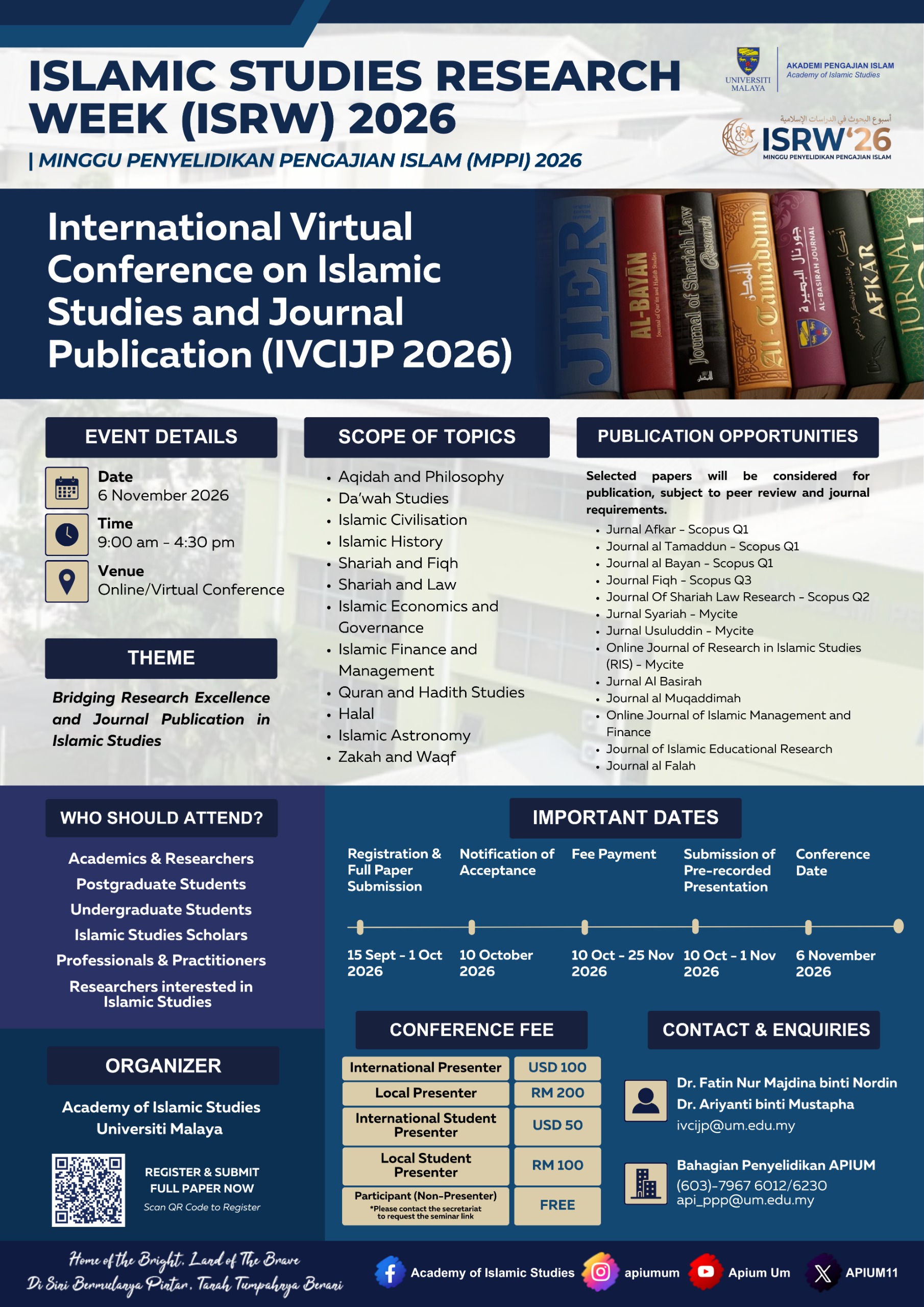
AFKAR: Journal of ʿAqidah and Islamic Thought was established in 2000 with the publication of its inaugural Volume 1 under the Department of ʿAqidah and Islamic Thought, Academy of Islamic Studies, Universiti Malaya. Since its inception, the journal has been dedicated to advancing rigorous and critical scholarship in the fields of Islamic creed (ʿaqidah) and Islamic thought, situating these disciplines within broader intellectual, philosophical, and civilizational discourses in the humanities.

During its formative phase, AFKAR was published on an annual basis, with one volume issued each year, reflecting a sustained commitment to scholarly depth and intellectual rigor. In response to the growing volume and diversity of high-quality submissions, as well as the journal’s expanding academic engagement, AFKAR adopted a biannual publication schedule beginning in 2015, with issues released regularly in June and December.

The journal’s development reflects its evolving role as a platform for interdisciplinary and comparative inquiry within Islamic studies, encompassing areas such as Islamic theology, Islamic philosophy, logic, Sufism, intellectual history, and comparative religious thought. Throughout this evolution, AFKAR has maintained its core focus on normative and classical Islamic scholarship while engaging contemporary theoretical and methodological approaches in the humanities.

In recognition of its editorial consistency, scholarly quality, and international visibility, AFKAR was indexed in the Emerging Sources Citation Index (ESCI) by Clarivate Analytics in 2018. This milestone was followed by its inclusion in the Scopus database in 2019, further affirming its position as a reputable peer-reviewed journal contributing to global academic discourse in Islamic thought.

In 2025, in line with the ongoing institutional consolidation within the Academy of Islamic Studies, Universiti Malaya, the publishing responsibility of AFKAR was placed under the Department of Usuluddin and Daʿwah. This transition represents an administrative realignment that reinforces the journal’s intellectual continuity, editorial stability, and long-term commitment to advancing scholarship in ʿaqidah and Islamic thought.